Blog Archives

Sandy Gibbs – The paradox of failure: sport, competition and contemporary art


14 April- 8th May
Sandy Gibbs
The paradox of failure: sport, competition and contemporary art

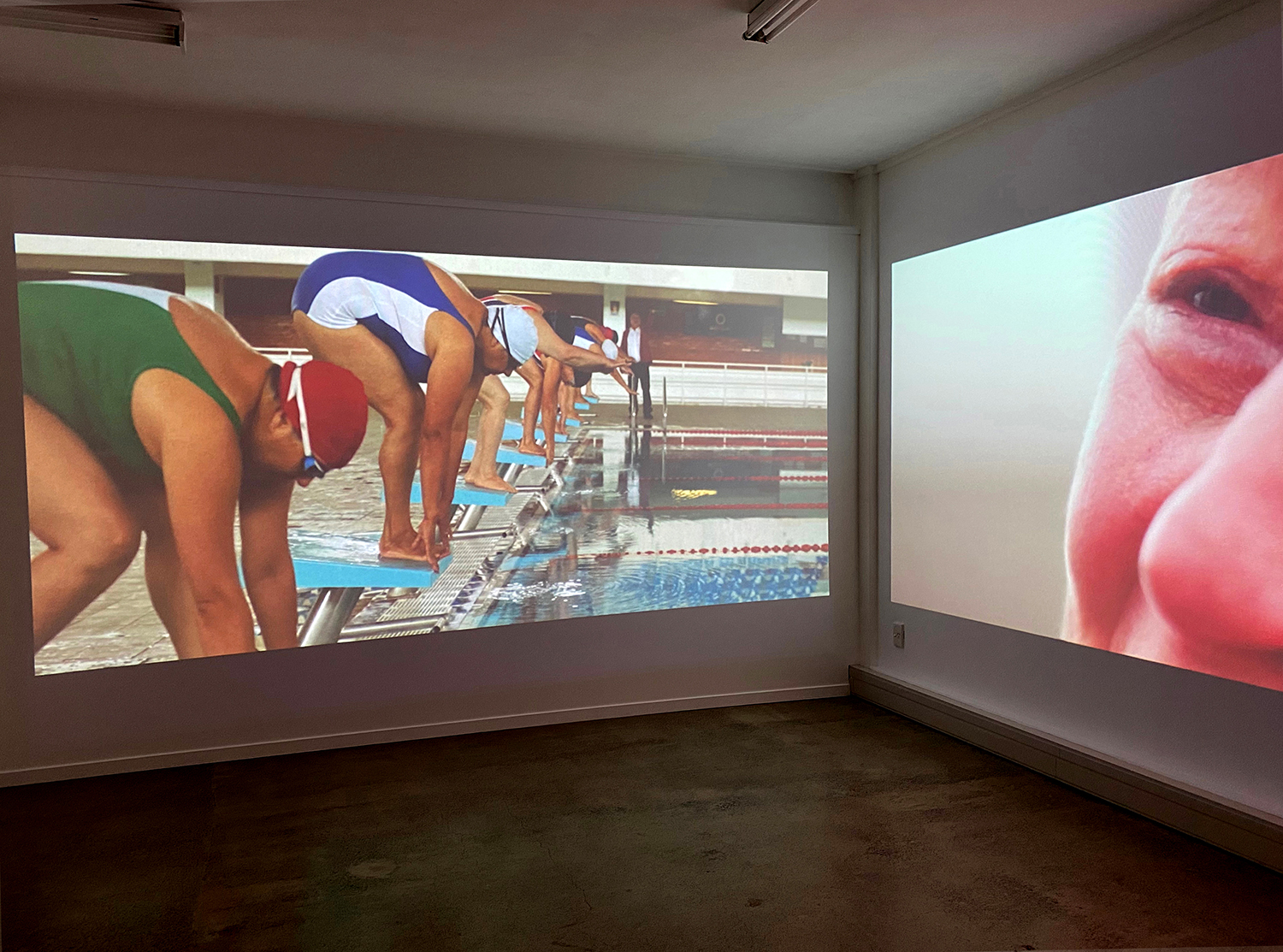
I seem to have spent large chunks of my life in swimming pools and changing rooms. Together with the pungent odour of chlorine, it’s a reminder of my 1960’s childhood dream of being an Olympic swimmer – along with my adolescent hero-worship of Tui Shipston who, as a 17-year-old schoolgirl from Christchurch, represented New Zealand at the 1968 Mexico Olympic Games. Idealistically, I believed in the hard-working, democratic rightness of Tui Shipston to win a gold medal – and, more importantly, as a scene-setter for my own future and indisputable swimming glory.

But I was destined for disappointment – she didn’t win.

Of the four events that Shipston competed in at the 1968 Mexico Olympics, she qualified in the finals for only one: the women’s 400 metres individual medley. My hopes were high, and I remember waiting eagerly for the results, only to discover that she came seventh. Seventh… my eyes glazed over in disbelief. Marked by Shipston’s failure to win a medal, it was as if my own failure had also been acted out in that swimming pool in Mexico City. Olympic success was not to be mine. Bloody-mindedly resistant to acknowledging Shipston as the seventh fastest in the world – in itself an act of herculean proportions – I’m ashamed to admit that my hero-worship crumbled and fell away as my own medal-winning fantasy collapsed.

Years later, I resolved to offer Tui Shipston the chance to swim that race again – and maybe win this time.

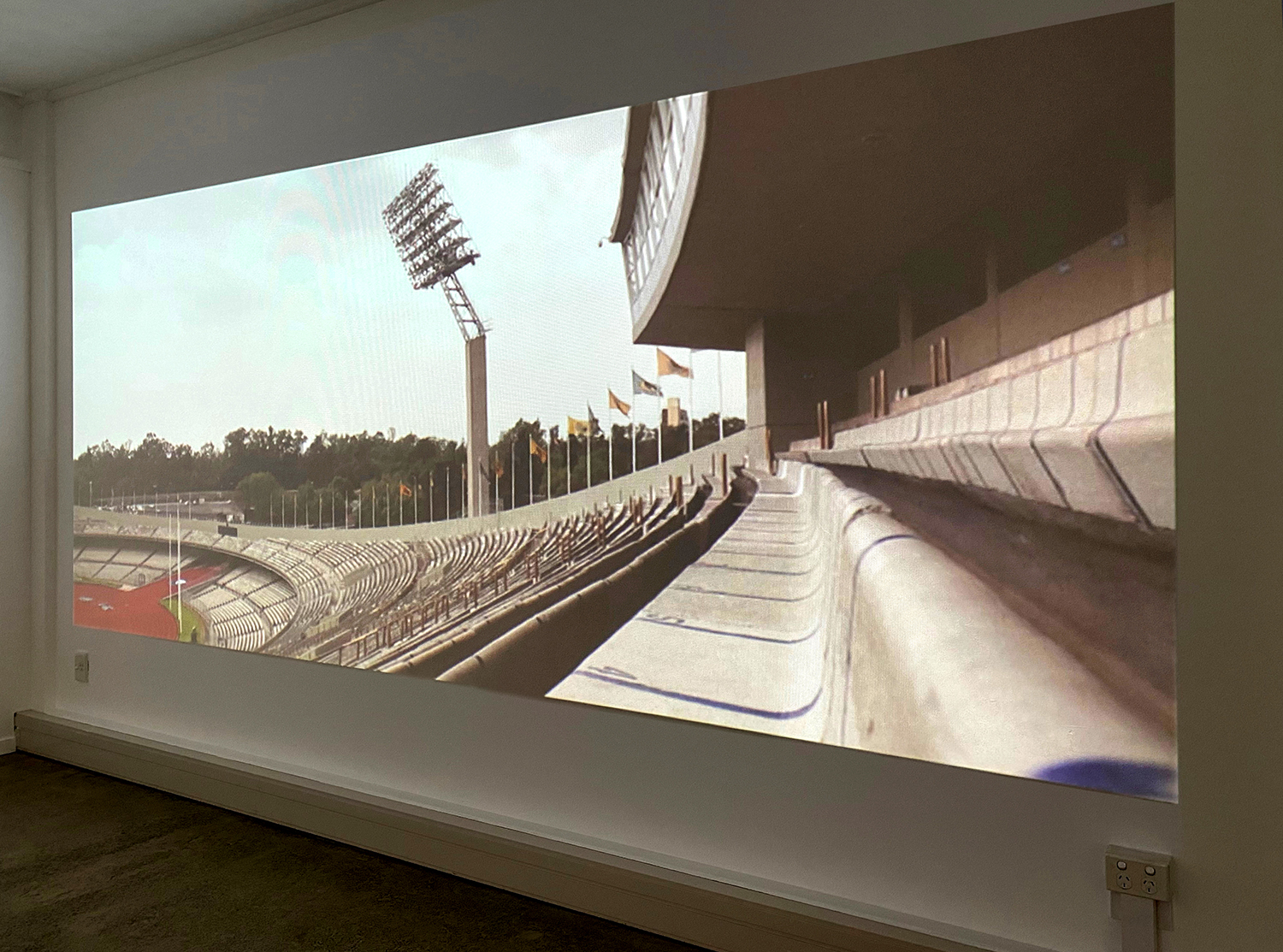
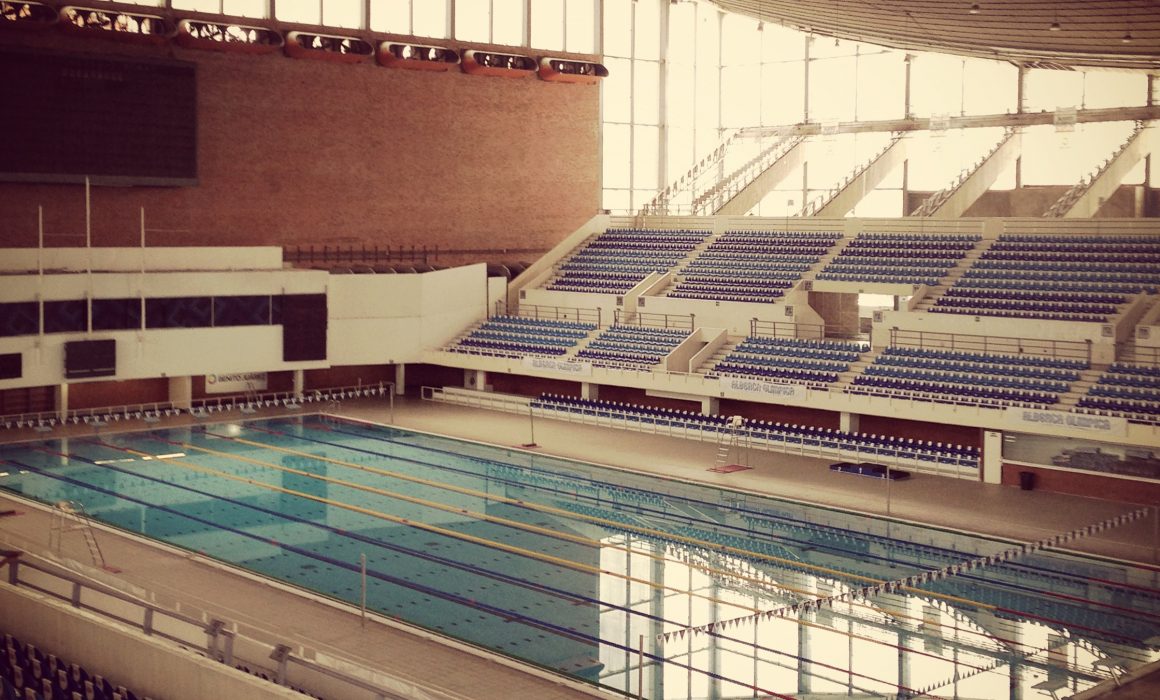
This was the starting point of this project: an optimistic proposal to restage the original swimming event in the same Olympic swimming pool in Mexico City, the Alberca Olímpica Francisco Márquez, and with the same eight competitors – all now in their 60s.

I rang Tui – but she said no!

This moment dramatically shifted the project from being about failure to being a project that was itself constituted by failures — and in doing so forced a paradigmatic shift in both the framing of the project and its methodology. Contingencies, happenstance and precarious optimism opened up possibilities, and I seized upon opportunities to expand upon restaging as an overarching methodology by obsessively enacting the central character and using my own ageing body along with the language of sport, performance and humour in different ways and modalities as a tool of investigation with which to produce a body of video artwork.

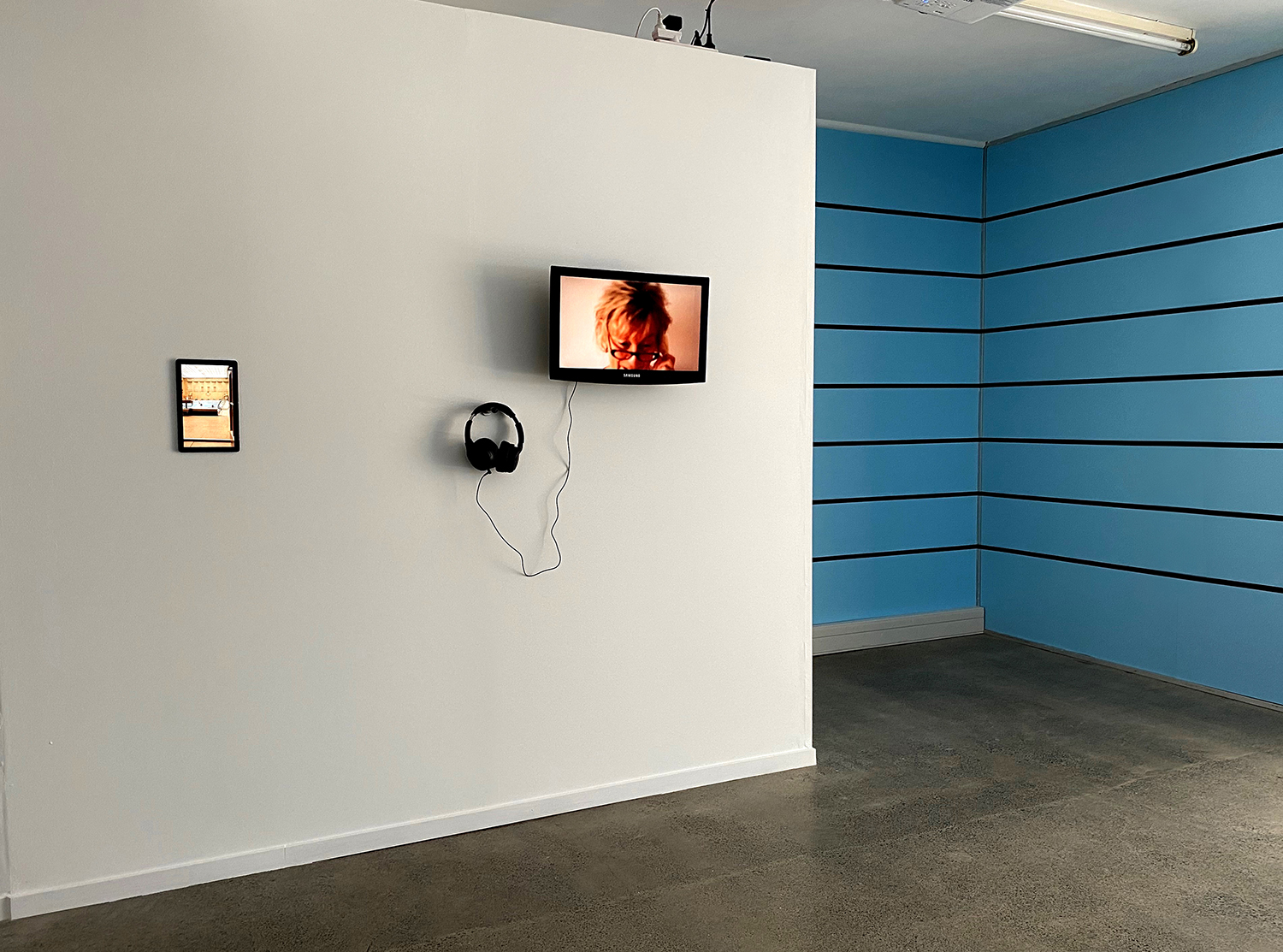
As such, each of the video works is a restaged ‘micro-event’ made in response to the unfolding research journey as I doggedly and somewhat obsessively attempted to track down all of the original competitors – all the while, operating within the contingencies of an ongoing durational project moving towards restaging the final swimming race in Mexico City.

Yukari Kaihori – In Searching of Deities

17 March – 10 April

Yukari Kaihori

In Searching of Deities

The non-human agent, object and our immediate environment.

The past year was eventful. In addition to Covid-19, there were many political incidents and new radical social movements all over the world. It has been overwhelming and has made us wonder whether the world has gone crazy. However, when exposed to things that can overwhelm me, I like to remind myself that I need to connect to the reality of “here and now” and not to live in my ‘headspace’ too much. If everyone were to do this then eventually each of us could realise that the reality around us is not overwhelming or in conflict with ourselves. 

How we see things depends on what and how we believe. For my project In Searching for Deities, I examine different belief systems in opposition to Kantian theories that question the human-centric view of the world. This includes Object-Oriented Ontology (OOO), the ideas of Timothy Morton and Tetsurō Watsuji, and animistic beliefs like Shintoism. In doing so, I am also seeking ways to de-link from the progressive line of modernity as discussed by Walter Mignolo, the founder of the modernity/ coloniality school of thought. Following his position, I try not to participate in a hierarchical culture structure, but instead attempt to give back the power to the objects and spaces.  

Both Timothy Morton, a philosopher who works in the field of ecological studies, and Walter Mignolo, the scholar developed the argument that modernity and coloniality come together like light and shadow. As part of this comes how the meaning of the word “genius” was changed during the Romanticism movement of the 18th Century. Originally, ‘genius’ related to the spirits or deities residing in specific places. Before the 18th Century, saying ‘she has genius’ would have meant that the artist was positively influenced by the spirits. The spirit could inspire, protect and empower a person. In this sense the idea of ‘genius’ was similar to indigenous and animistic cultural values; the power belongs to places and without spirit man did not have the power to create. Colonization and modernization changed the meaning of ‘genius’. We now say ‘she is a genius’ as if she owns and possesses the power. In this project, I intend to use artworks that draw influence from the immediate environment: the exhibition space of RM gallery that comes with local deities and is attached to the community. The intention is to bring awareness to the “here and now”- the actual place we install works and with which we interact. 

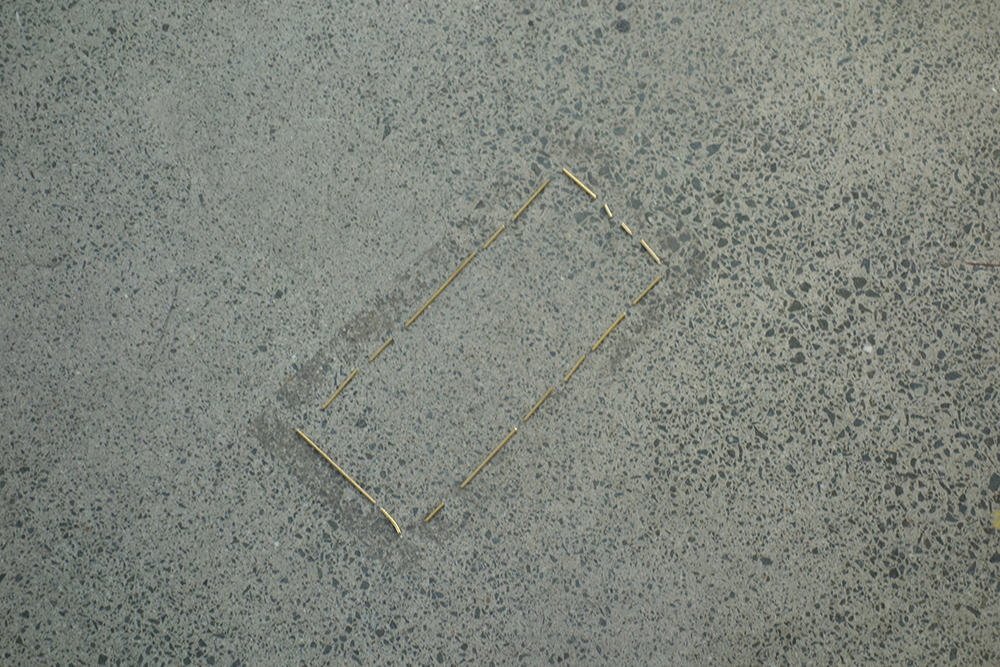
Thought is given to considering objects and spaces as possessing spirits or being deities, which may motivate us to care more for our immediate environment. We may need to be aware of our immediate space, to be living ‘now’, and to be ecological. My recent studio practice is a site-specific project concerning the ‘here and now’ of the present time and space. By paying attention to a unique object or the space that one inhabits, the individual becomes more connected to the ‘now’. This installation aims to enhance and intensify the quality and characteristics of the existing space, including residues of artworks left from artists exhibited at RM. 

Sena Park – Aliveness_Symbiosis_on K-rd

Sena Park
Aliveness_Symbiosis_on K-rd
17th February – 13th March

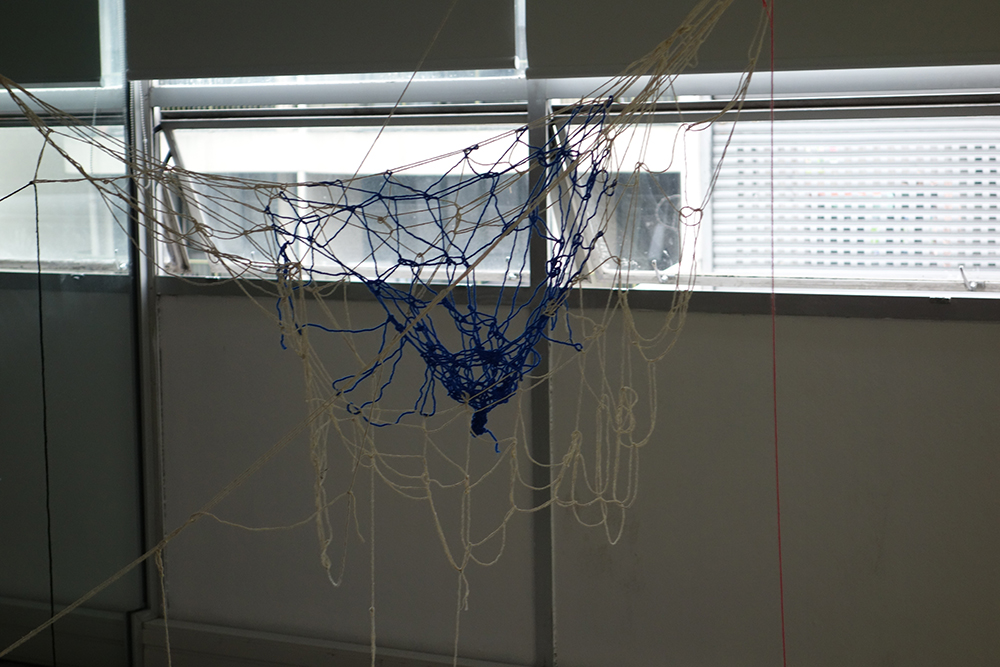
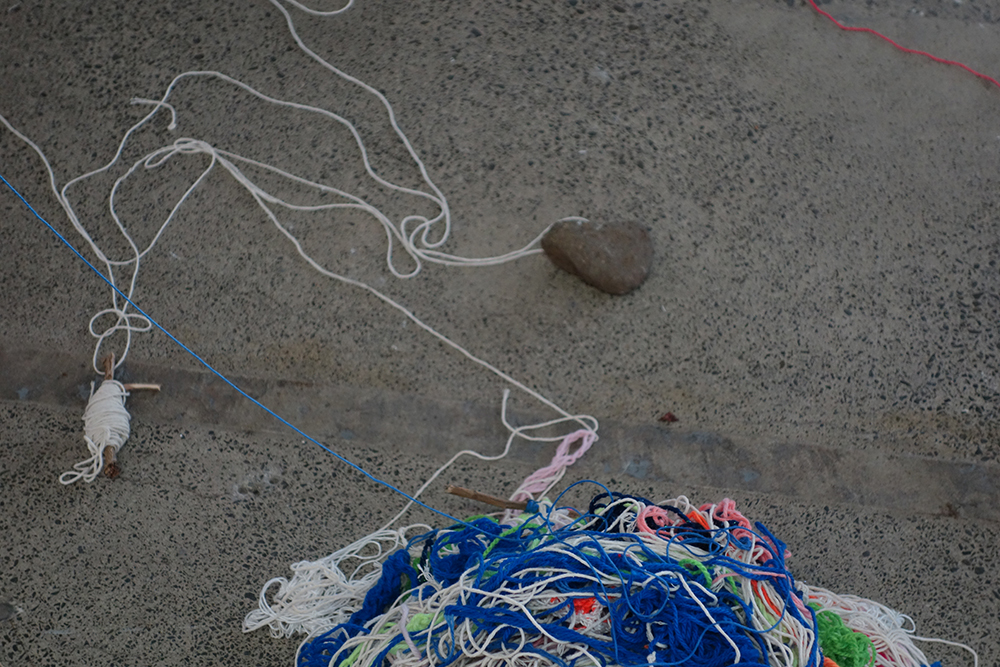
We walk into human-made spider webs. The spider webs are exaggerated and modified from its natural size and form. We mingle with it. We can walk, rest, chat and eat freely around it ignoring its existence.

Humans are members of the ecological community on our planet, as are any other living organism. Unconsciously or consciously and intentionally or unintentionally, we break the balance and disturb our ecological system causing a global issue. Our complex society and relationships have balance and tension like the form of the spider web. My ongoing installation project Aliveness_Symbiosis represents that we live in our place without noticing that we are sharing our nature and living together with numerous cohabitants.

Daniel John Corbett Sanders – Urban Nothing

27 Jan – 13th Feb 2021

In space R
Daniel John Corbett Sanders
Urban Nothing

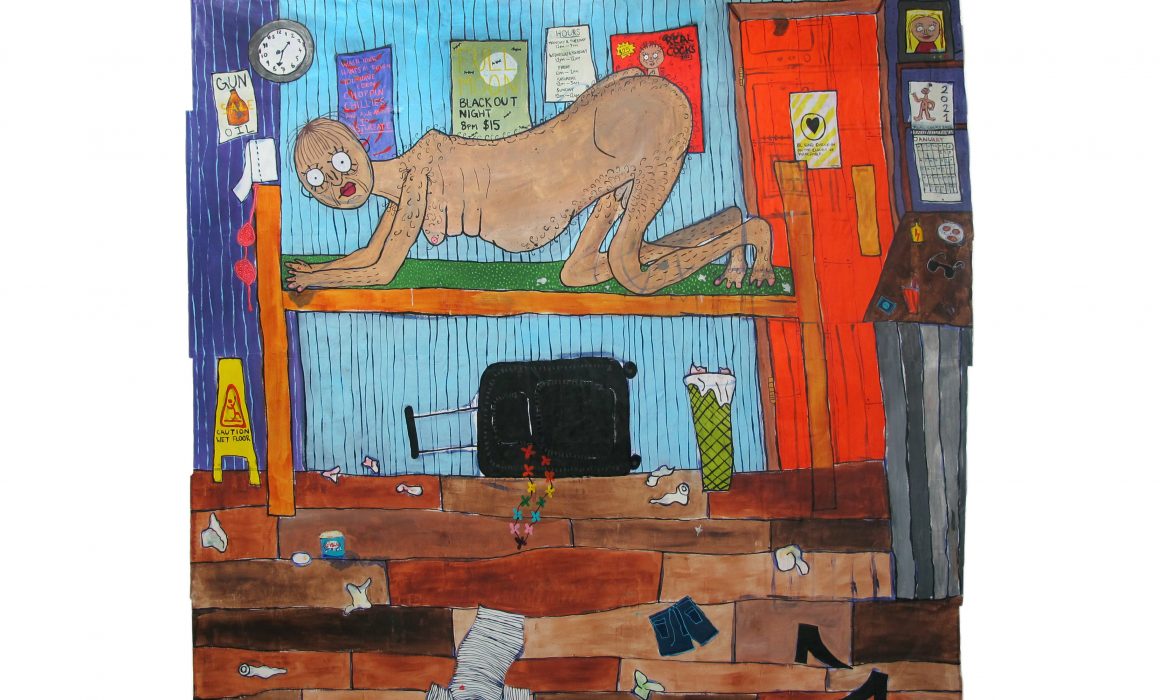
In Urban Nothing the ‘gay bathhouse’ is presented as a paradoxical figure of revolutionary utopia and commodity spectacle, as a fossilised archetype of social transformation and ruin of haunting cultural potential. Through queer narrative documentary, Sanders explores the sexually charged and commodity-entranced space of the gay bathhouse as a microcosm of late capitalism, and as an exemplary site for excavating how a queer perspective on inner-city reality might expose contradictions otherwise obscured by mythic narratives of progress. 

DANIEL JOHN CORBETT SANDERS (b.1994) is a Taranaki Pākehā multidisciplinary artist and independent curator. They studied at Elam School of Fine Arts, University of Auckland and Auckland University of Technology. Their work investigates the dreams and catastrophes of recent urban history viewed through new queer narratives of inner-city life. Recent exhibitions include Social Practice, Tāmaki Makaurau, 2020; Intimate Atmospheres, Artspace Aotearoa, Tāmaki Makaurau, 2019; After Jack, Window Gallery, Tāmaki Makaurau, 2018; Under Your Skin You Look Divine, Basement Specialist Adult Store and Sex Club, Tāmaki Makaurau, 2018. In 2020 Sanders founded Parasite, an artist-run gallery prioritising the exhibition of LGBTQ+ artists.

Emelia French – Sun Room

27 Jan – 13th Feb 2021
In space M
Emelia French
Sun Room

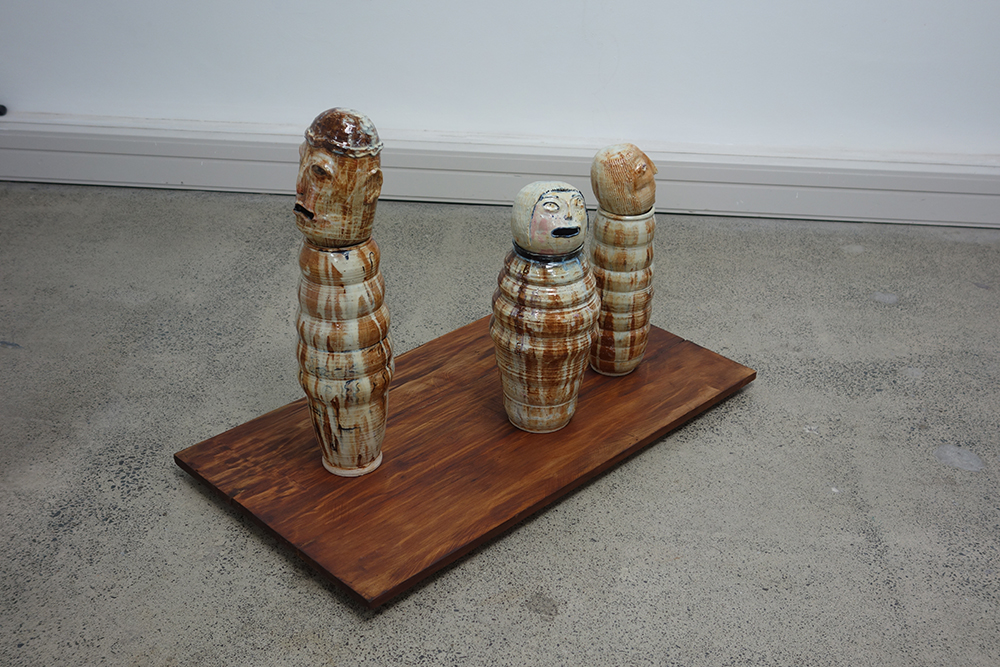
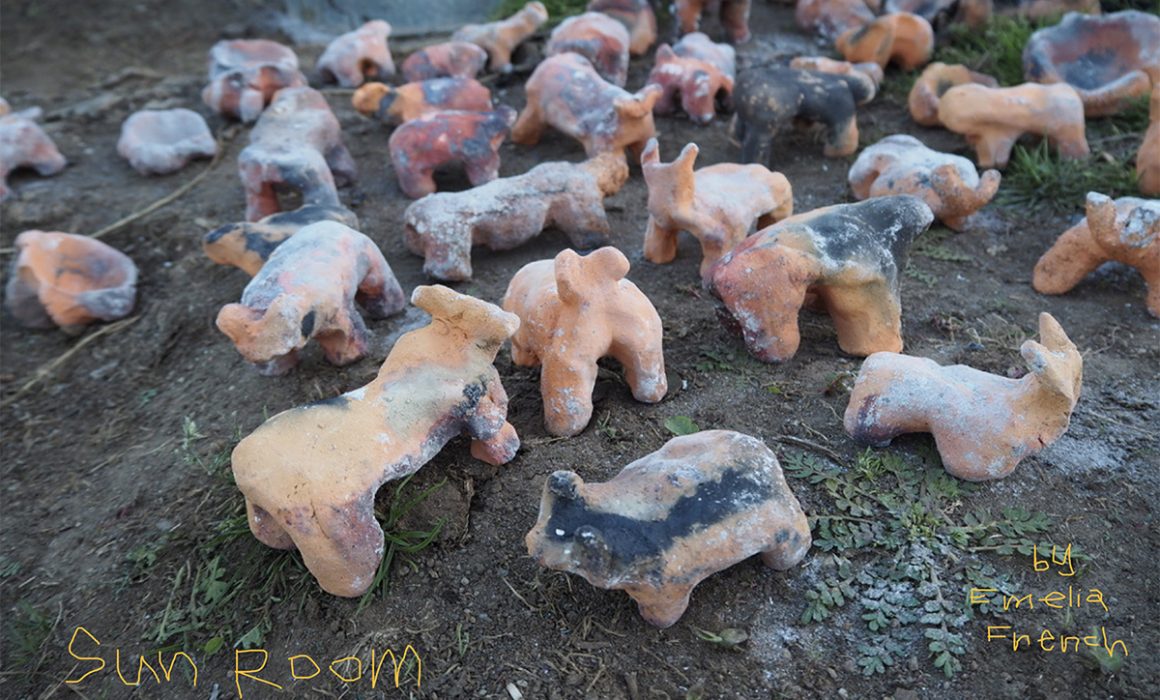
A soft warm glow
The body is listening
With a heartfelt intelligence
And a hand to the soil
Practising subterranean logics

Prepare the atmosphere: arrange the space
Waiting for something to arrive
An almost imperceptible murmuring 
Sensing, intuiting, receiving, responding
My touch is light 
Things are left open 

Form entangling with action
A poetry of gestures and marks 
Exchanges, reciprocities
Interdependently growing forms 
A cosmic relationality 

Traces are stories of action 
Surface: the place where we meet
Felt on the edge of the skin 
Discolouration, dents, peelings, rust, stain, warping, shrinking, cracking
Material bathed in the sun 
Inclusions 

A quiet authority
And a trembling resonance 
Hovering just in reach
Between being something and nothing
Unpractised 

Poetic irregularities and variabilities
Word play and world play
The limits of language and representation
Similes, metaphors and meteors 
Composites and compost
Circulating associations
The reflection of a sunset speaks loudly of days

_

Emelia French (b. 1994, Taranaki, Aotearoa) is an artist and researcher living in Tāmaki Makaurau. She is currently completing her PhD in Visual Arts at AUT University. Her practice is processual and transdisciplinary and includes storytelling, ceramics, painting, photography, bookmaking, metal-work and sculpture. 

The final line of this exhibition text, read as “The reflection of the sunset speaks loudly of days”, is a sentiment borrowed from Agnes Martin (journal entry, 1988). 

Samuel Montgomery and Daniel Ellison – What’s the Point

Space M
Samuel Montgomery and Daniel Ellison
What’s the Point
25 Nov – 12 Dec 2020


RM presents What’s the Point, a show of new work by Daniel Ellison and Samuel Montgomery that touches on a variety of issues contributing to what has so far been 2020. Reality and make-believe provided us with a monolithic pile of stories to mull over throughout the year, and as we watched all the bad guys and mediocre guys play them out, we became closer. While people around the world were thrown into various degrees of lockdown, us privileged folk—although physically restricted—took to the internet to experience the world we were missing out on and expand our minds. Aside from giving us cancer or whatever, 5G and social media still allowed us all to connect and share our experiences. Unfortunately, it also gave birth to some pretty frightening theories and events, revitalised old prejudices, and even turned some weirdos into celebrities. But the attention economy doesn’t discriminate, and neither should we. In What’s the Point, Ellison and Montogomery both present work made over the past few months as they both tried to maintain their practices and have a semi-normal life while navigating the various extremities taking place both here and overseas.

Matt Ritani – All Roads

Space R
Matt Ritani
All Roads
25 Nov – 12 Dec 2020

It feels like flying. Arcs, bumps, and the hills curl up. A parallel to the nape of your neck. Lines pour like water. Rumbles and cracks. They are everywhere we can get to. The trip is always out of time. 7.40 pm dark greens and the humidity of unbroken rain. Sometimes slow and dusty. Sometimes you think you could get crushed at any moment. A red zig-zag queries your kupu. How did we get here? Why is it like this? She walked all along Te Ika-a-Māui. We would marvel at their beauty if they weren’t so ordinary these colossal leaf vein systems. If you imagine the city, gaze east-west and see it rise and fall. Covering something doesn’t stop it from being there like painting over a painting. Our basements are cavities and our piles are not perfect cylinders. The foundation beams aren’t square. Our children, the archaeologists, will one day dig them up. They will stare at the mottled edges and wonder why we tied whenua to our intentions.

An essay by Tyson Schmidt, Roads are big business accompanies this exhibition and can be found here.

Julia Reynolds and Frances Duncan

Julia Reynolds
Frances Duncan
At The Horizon: Burdens and Possibilities of the Mother Tongue
Interactive Audio Visual Installation
4-21 November 2020

The installation seeks to traverse across three generations of women from a personal experience of this artist living in New Zealand; my mother, myself and my daughter as a mode of thinking about language as inheritance, and as systems of construction of the female, (withheld and at flux).

The site is set up as a ‘hot-desk’ within an already established office and working environment. Users are asked inhabit this space to engage with the 9 non-linear chapters which are inspired by Maya Deren’s essay, An Anagram of Ideas on Art, Form and Film (1946).

The user chooses chapters through an anagram template, suggesting that the linearity of information is of no-consequence to meaning, and instead there is a cross-over connectivity of themes through the anagram to suggest alternative systems of comprehension. The structure engages with the understanding of Mother-Daughter as a crossover of reference and identity.

Grant Priest – All by the side of the runway where it hums

Grant Priest
All by the side of the runway where it hums

4-21 November 2020

Kohuora Auckland South Corrections Facility is a prison complex operated by Serco, a multinational corporation based in the UK. Serco takes on contracts from governments around the world to operate public services on their behalf. The services they operate range from prisons to hospitals, border patrols to immigration. This complex is located next to Matukutūreia, a quarried out Pā site in Wiri, South Auckland, once home to a thriving Māori community with some of Aotearoa’s earliest remaining examples of Māori agriculture.   This initial film work is the beginning of a project exploring the relation between this land, the prison complex and my presence in this space. It approaches the problematic descriptive nature of film. It is intended as a documentation of time spent with this space; finding the lay of the land, familiarising myself with the environment and the wider structural and everyday contexts within which this facility exists.

RM Gallery and Project Space
Hours
Thursday and Friday 1pm - 5pm
Saturday 12pm - 4pm

Samoa House Lane
Auckland Central 1010

We are located in the centre of Auckland, off of Karangahape Road, on Samoa House Lane, just off of Beresford Street -- look out for the incredible fale of Samoa House and you're nearly there. We are 2 minutes walk from Artspace and Michael Lett.

The RM Archive Project

Help us identify what is in our Archive! We have digitised many slides in our archive and invite participation to identify them. Please click here to access the collection.
https://www.rm.org.nz/thearchiverm

Our Boxed Archive
Since 2009 RM has been building an archive of material related to our exhibition and event programme. An index to the collection is available here.
https://www.rm.org.nz/thearchiverm/artist-boxes-index/

Safe Space Alliance

RM is a member of Safe Space Alliance

A safe space is a space where the LGBTQI+ community can freely express themselves without fear. It is a space that does not tolerate violence, bullying, or hate speech towards the LGBTQI+ community.

A safe space does not guarantee 100% safety, rather, it’s a space that has your back if an incident (violence, bullying, or hate speech) were to occur.

Click here to find out more about Safe Space Alliance

Subscribe to the RM mailing list