

Kalpana Pandaram and Lisa Crowley
aao, batt karo (come, talk to me)
the aperture of the moon
16 July – 23 August 2025
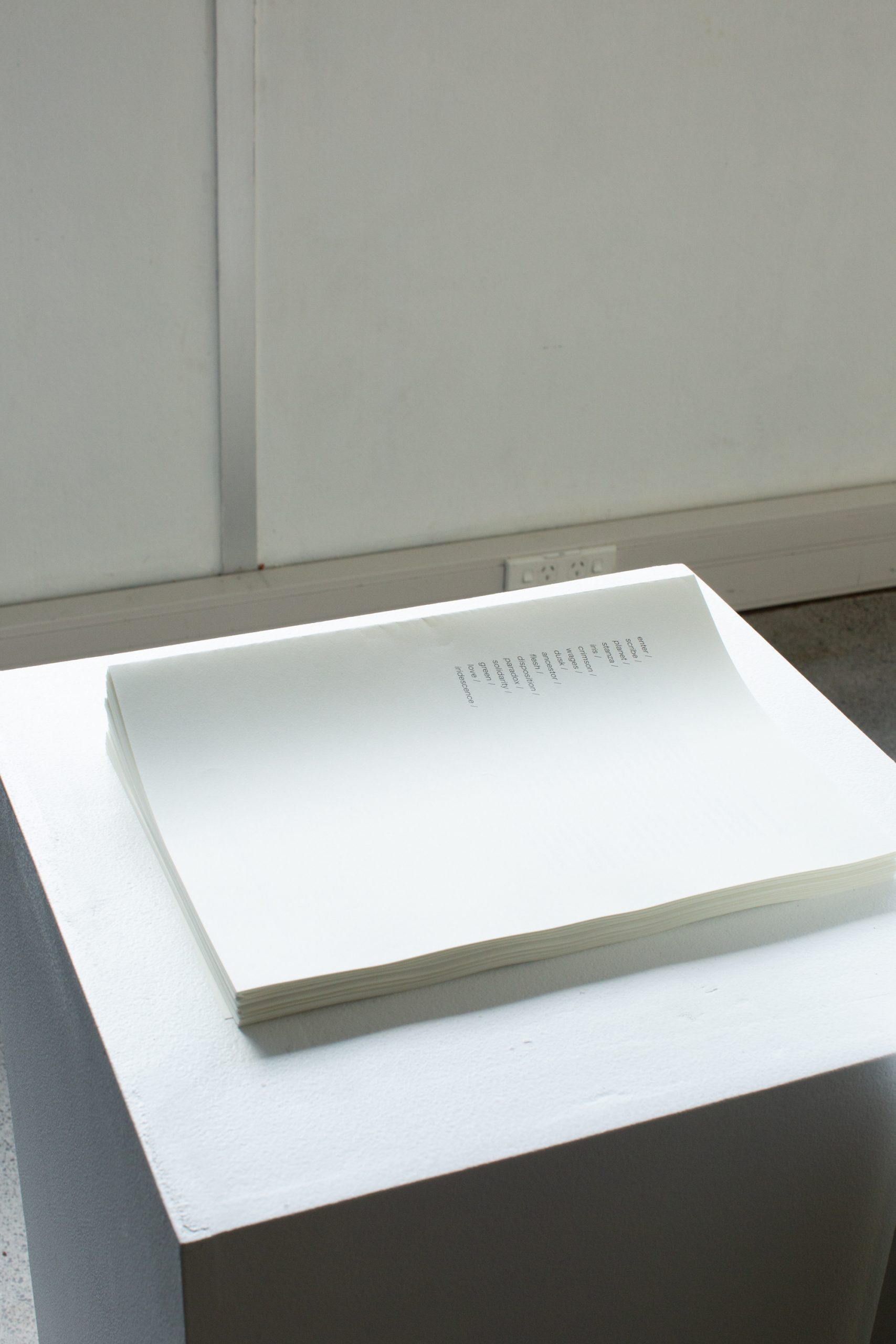
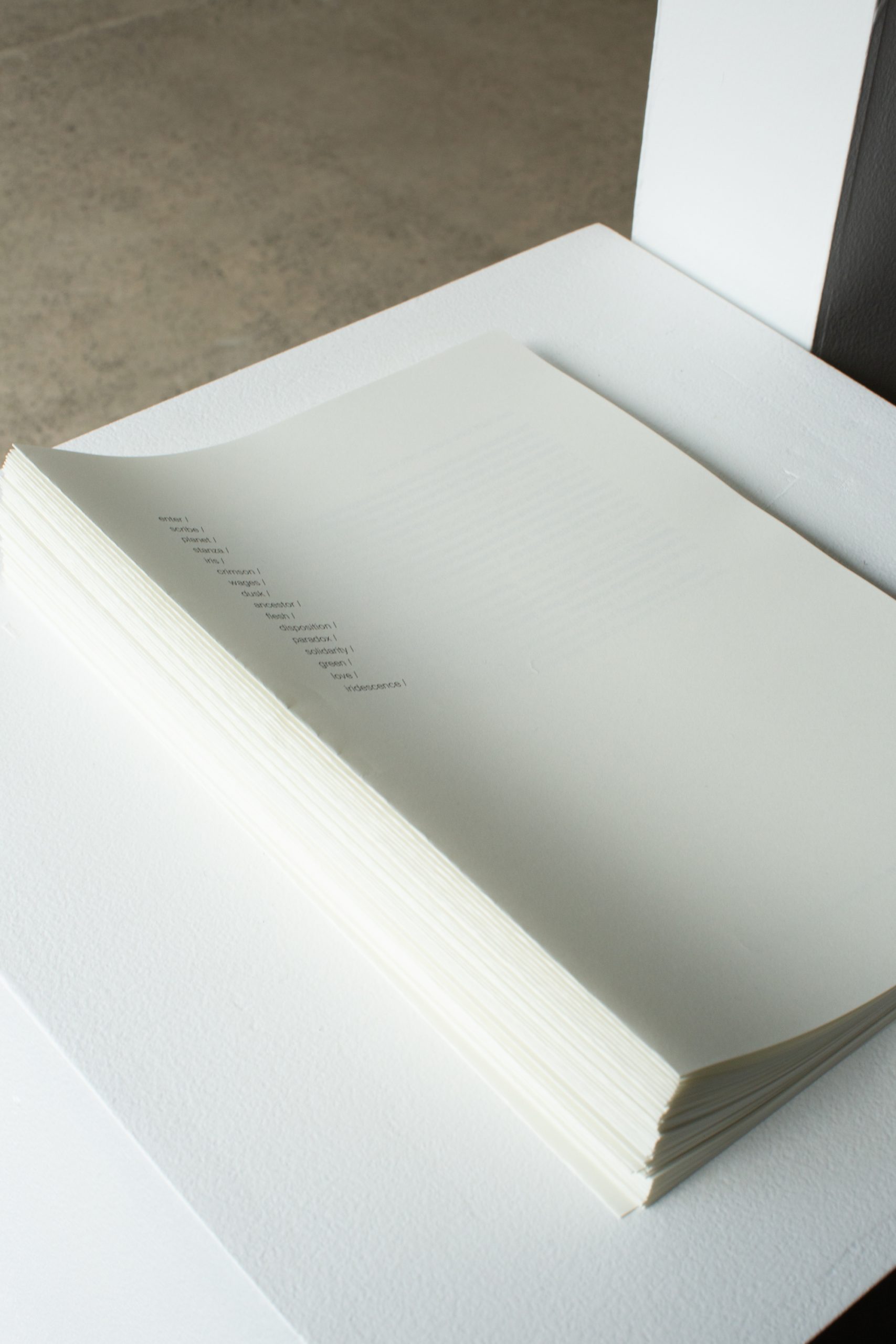
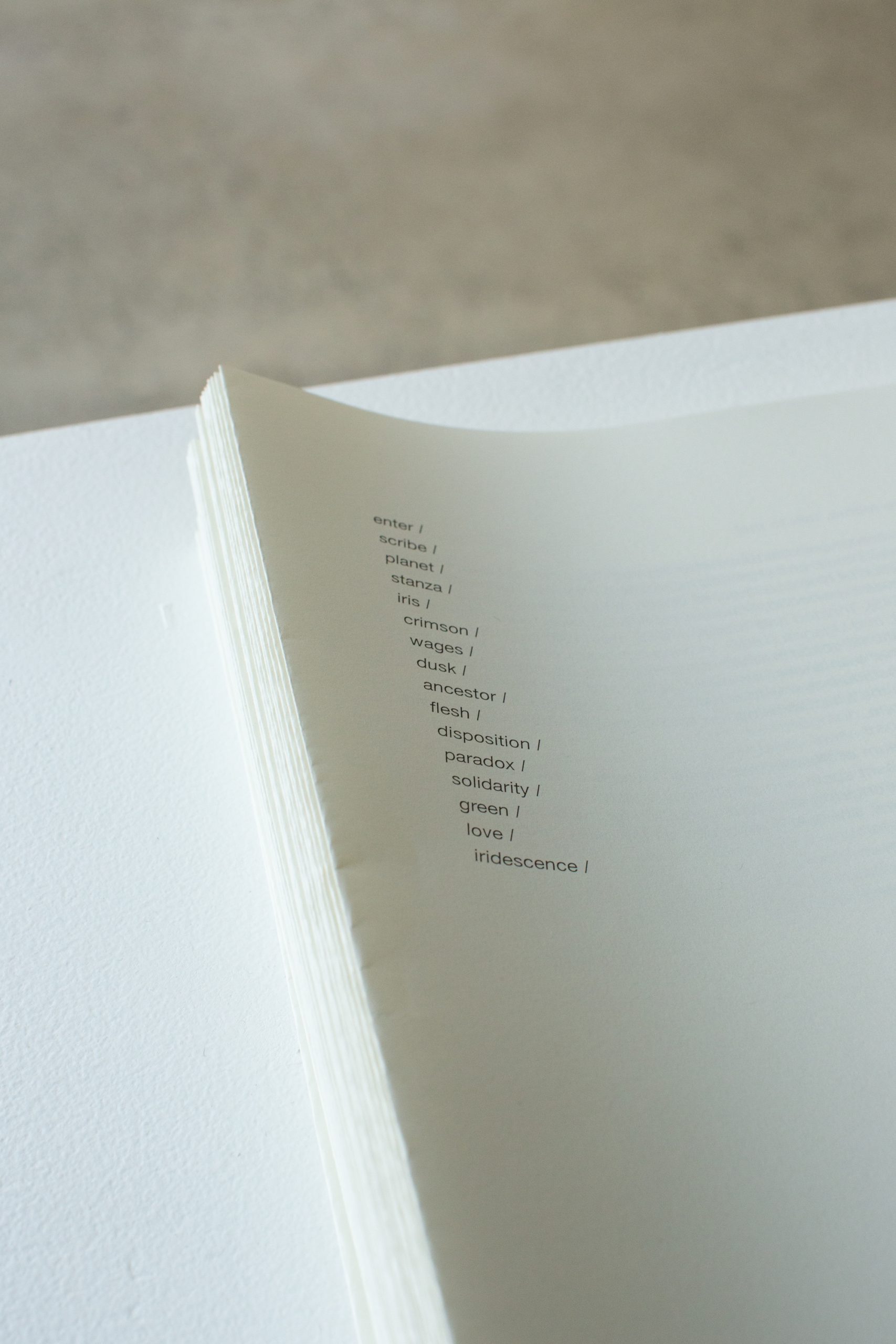
enter /
scribe /
planet /
stanza /
iris /
crimson /
wages /
dusk /
ancestor /
flesh /
disposition /
paradox /
solidarity /
green /
love /
iridescence /
aao, batt karo (come, talk to me)
Kalpana Pandaram
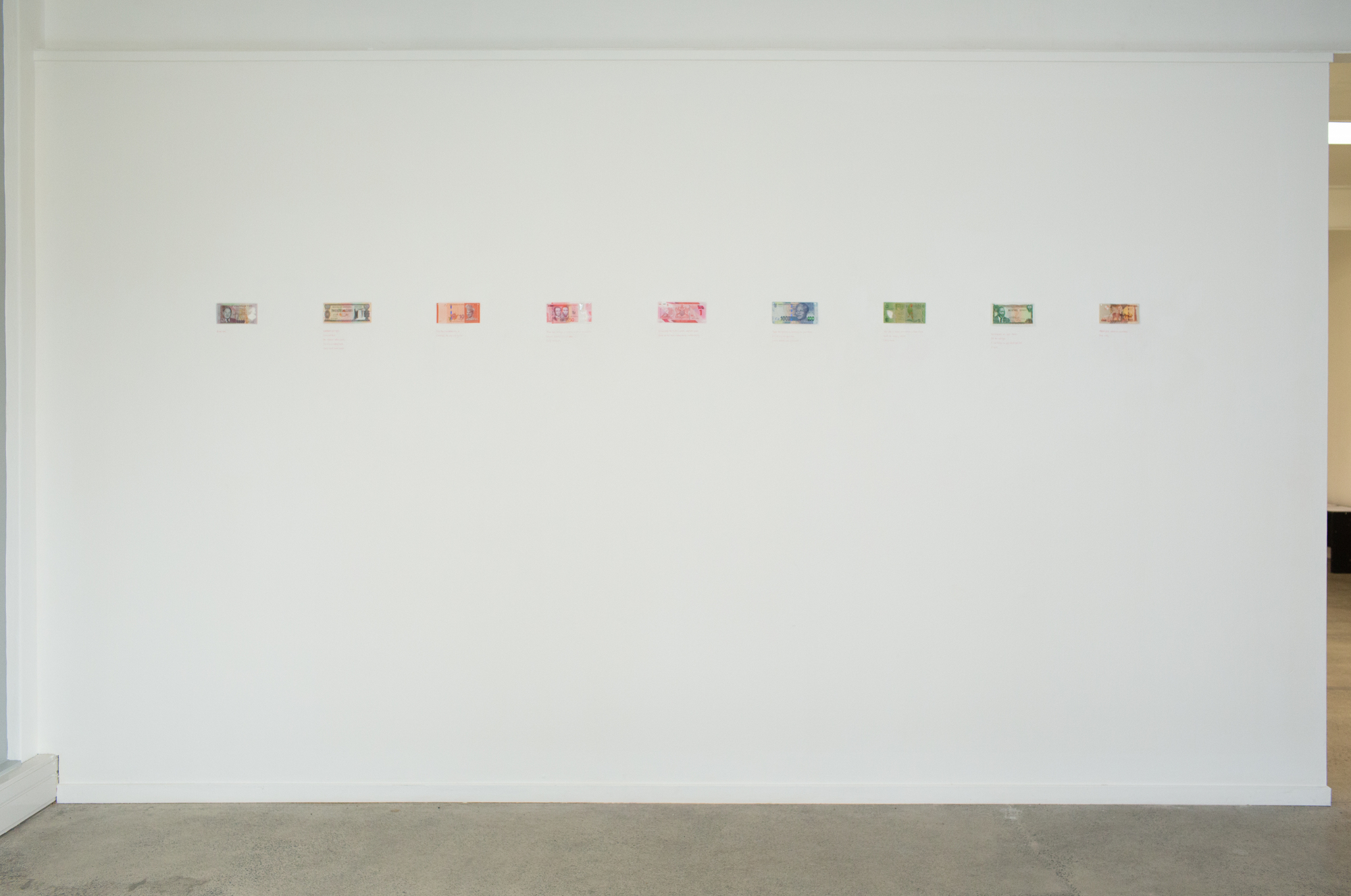
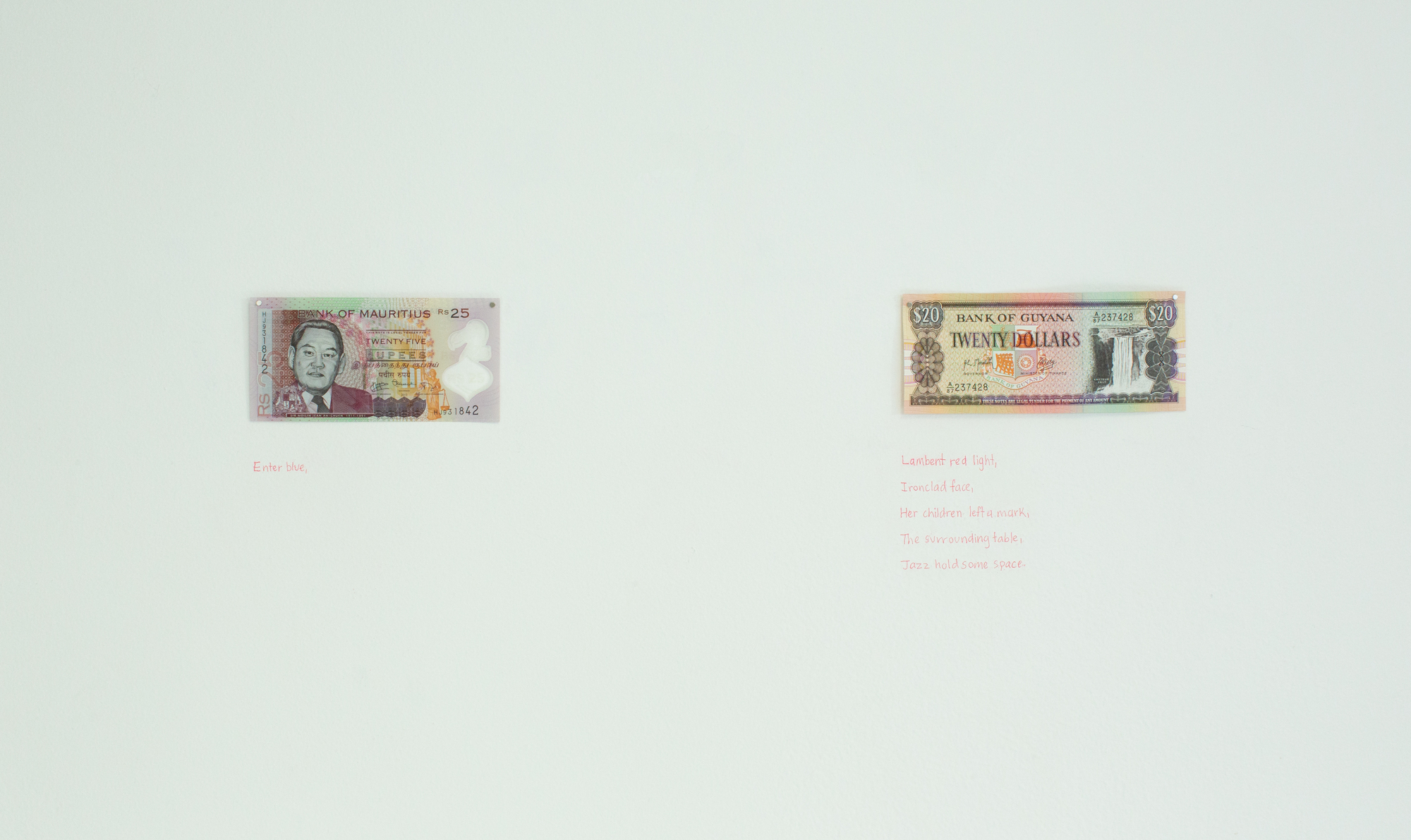
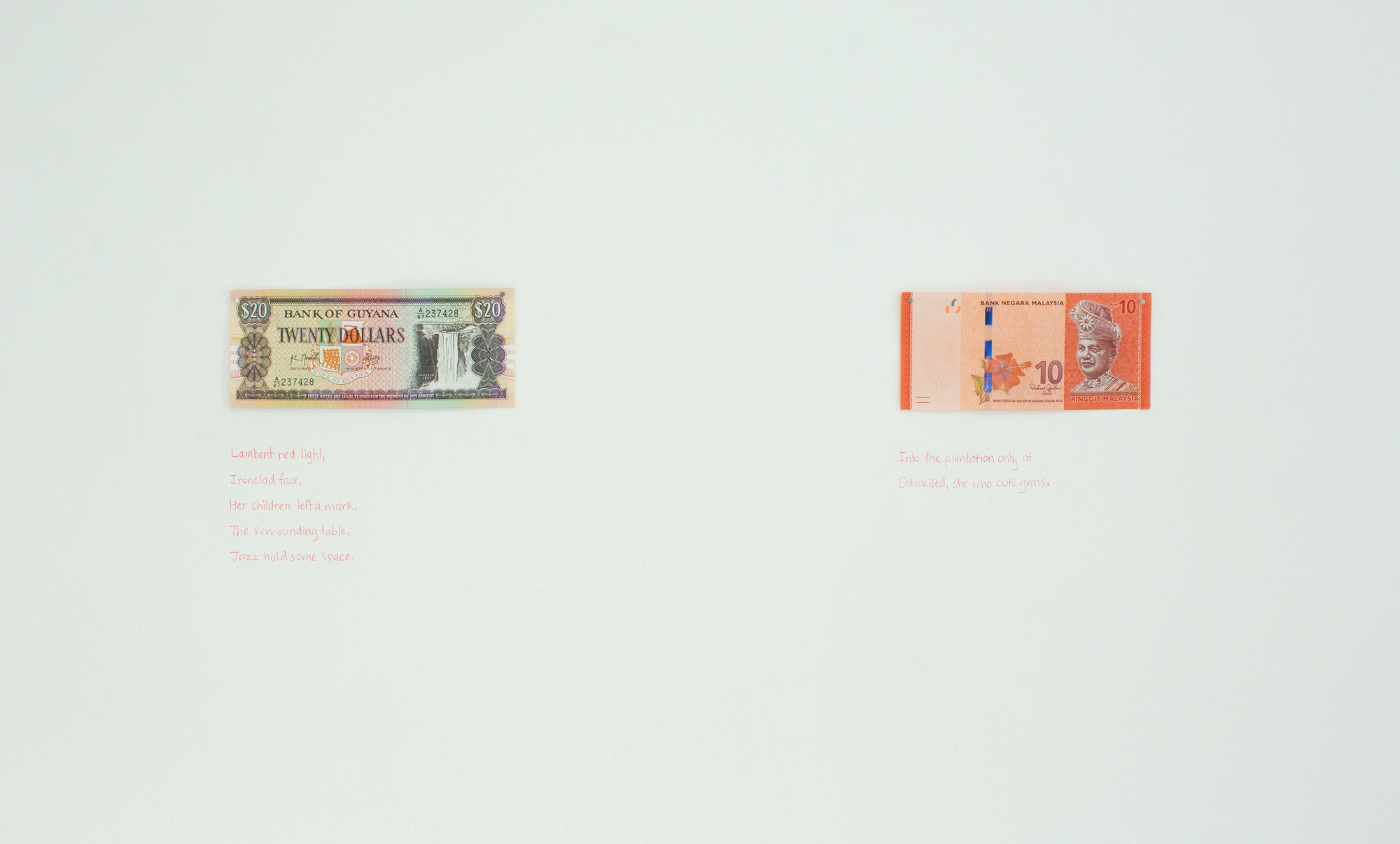
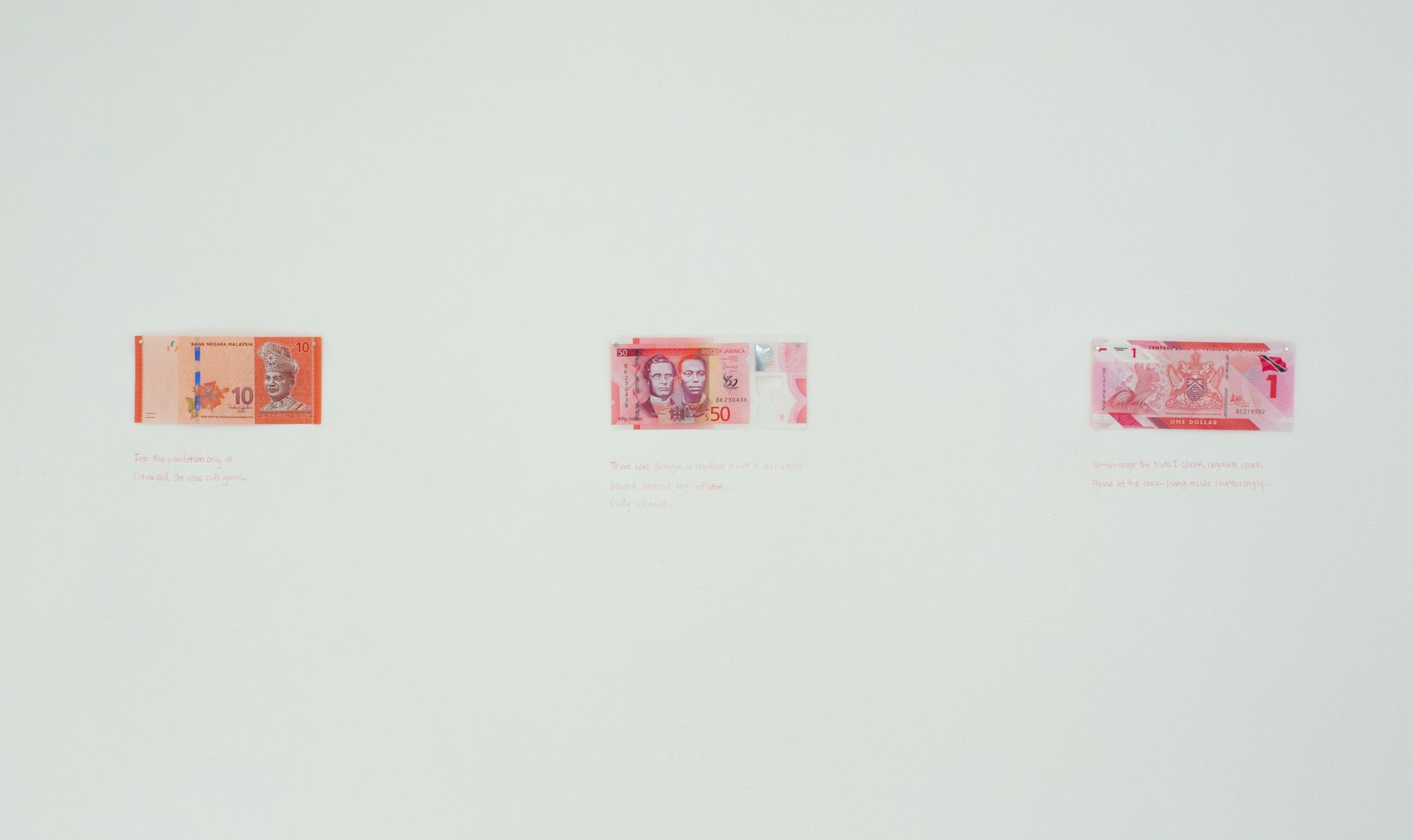
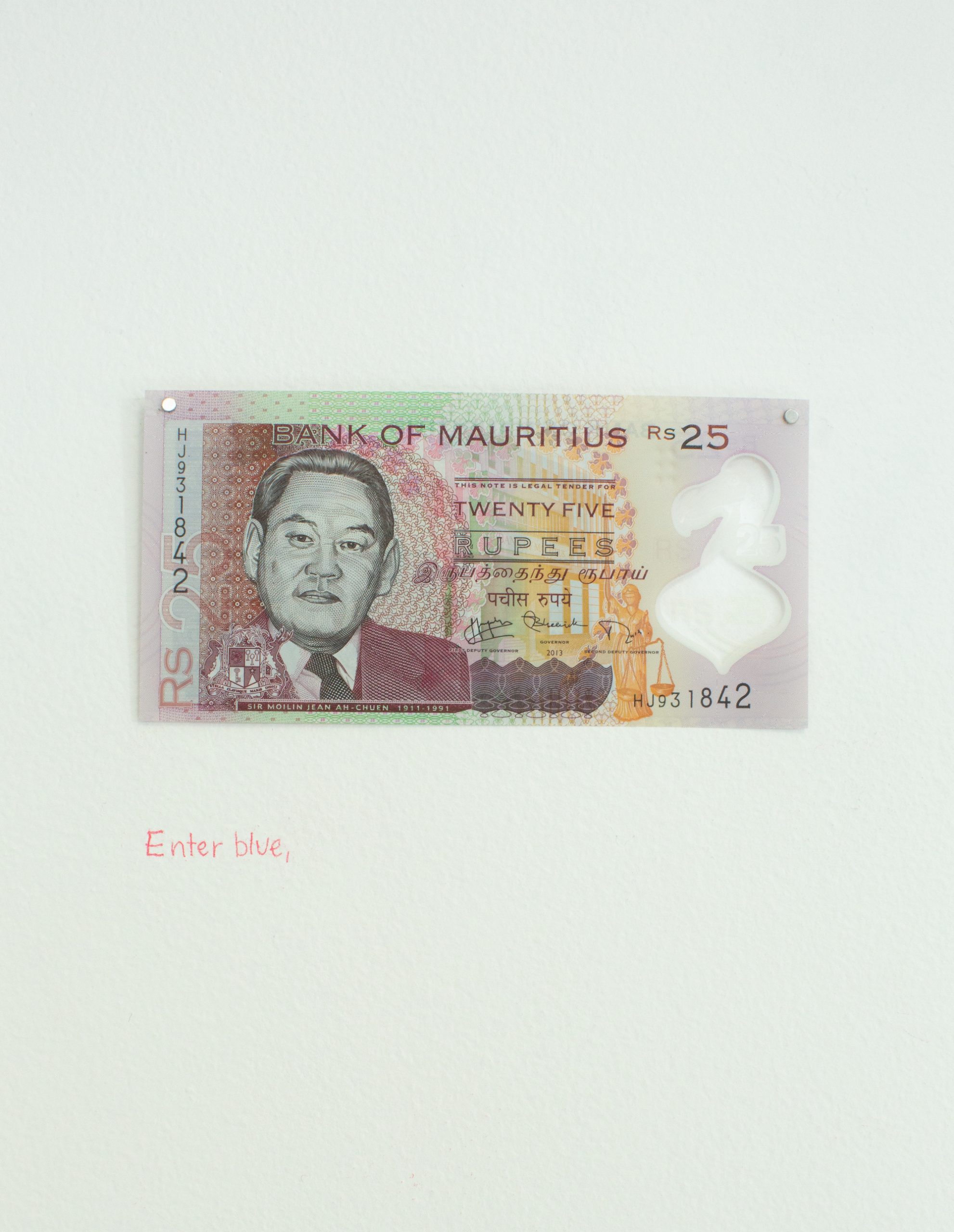
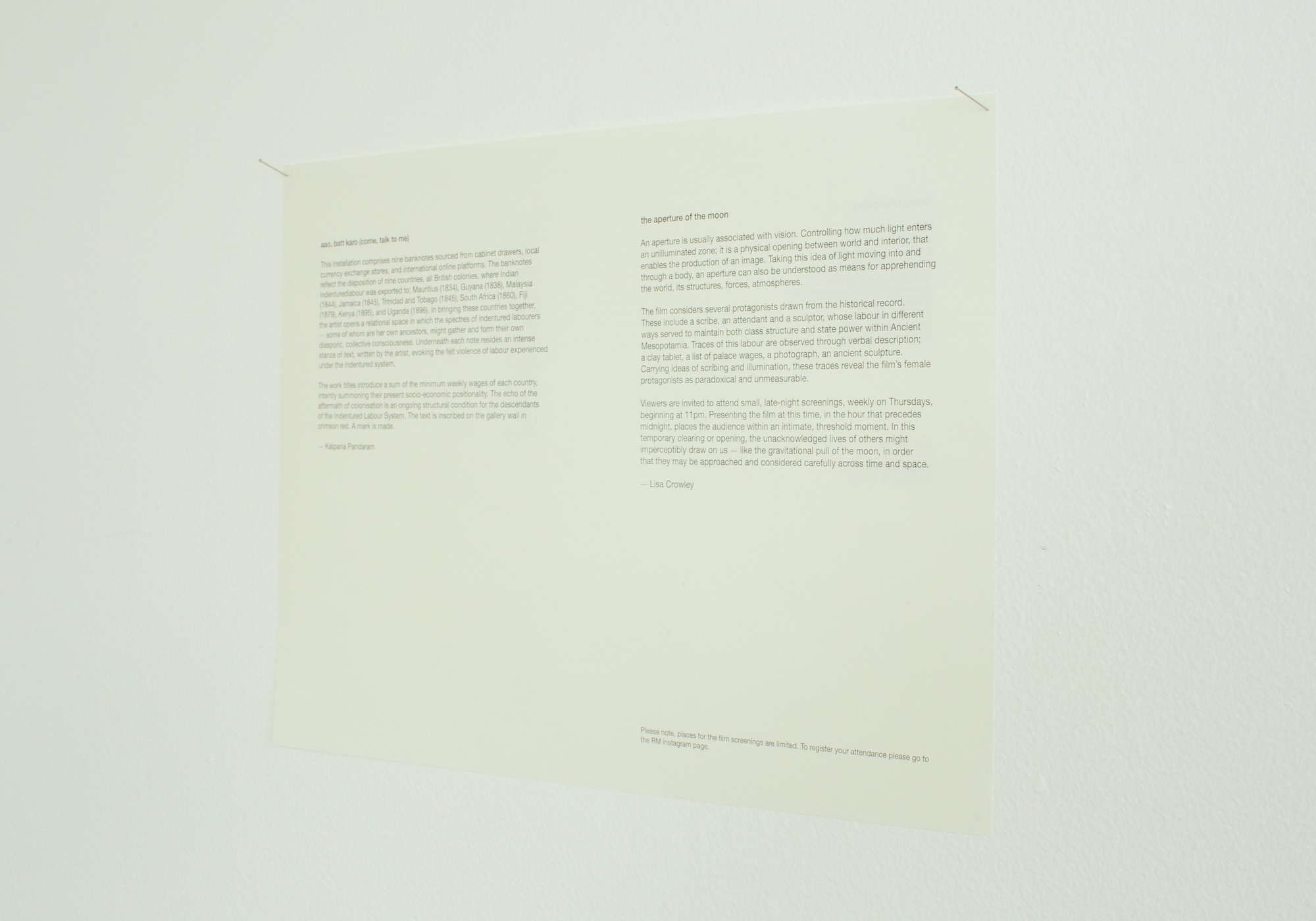
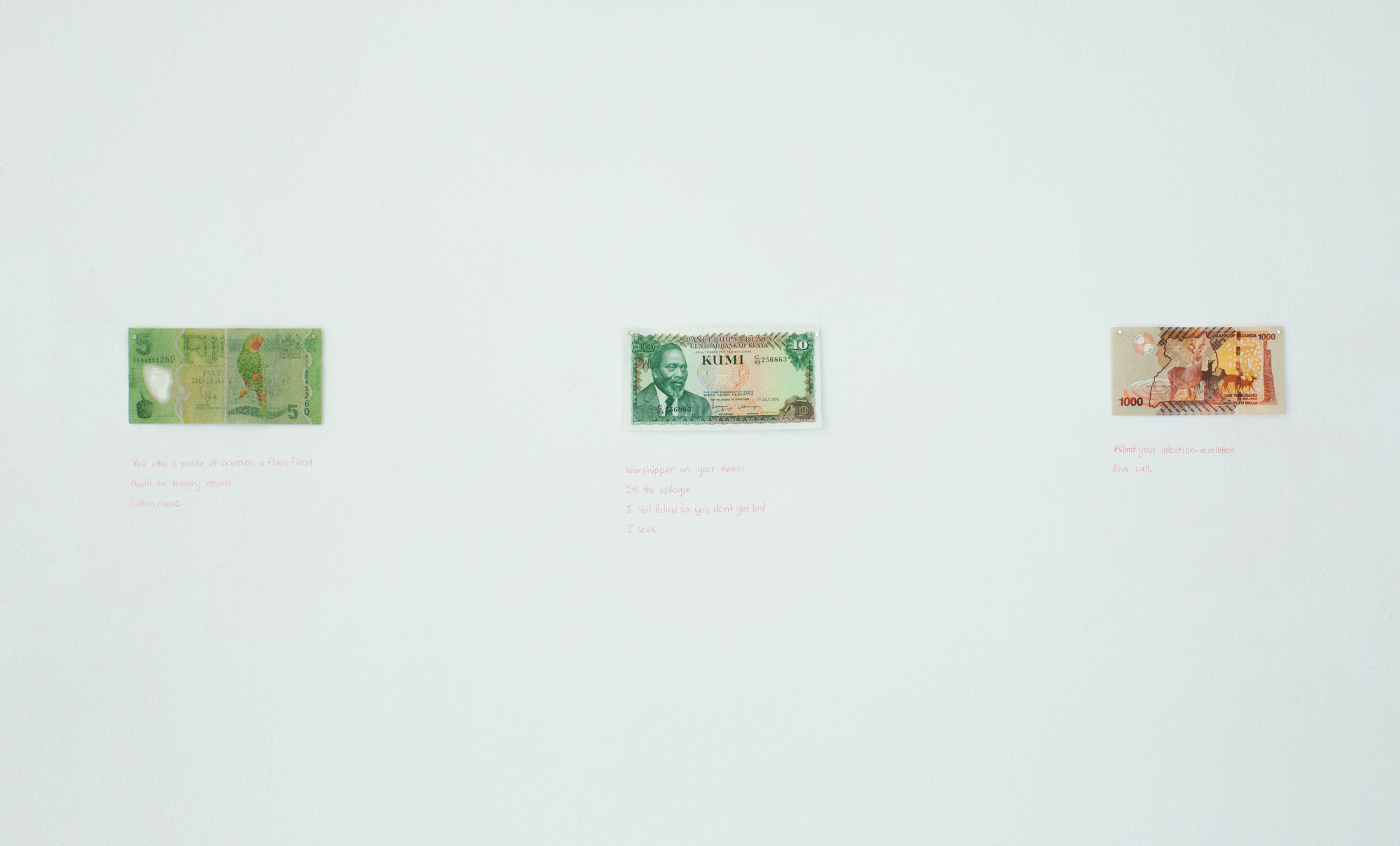
This installation comprises nine banknotes sourced from cabinet drawers, local
currency exchange stores, and international online platforms. The banknotes
reflect the disposition of nine countries, all British colonies, where Indian
indentured labour was exported to; Mauritius (1834), Guyana (1838), Malaysia
(1844), Jamaica (1845), Trinidad and Tobago (1845), South Africa (1860), Fiji
(1879), Kenya (1895), and Uganda (1896). In bringing these countries together,
the artist opens a relational space in which the spectres of indentured labourers
— some of whom are her own ancestors, might gather and form their own
diasporic, collective consciousness. Underneath each note resides an intense
stanza of text, written by the artist, evoking the felt violence of labour experienced
under the indentured system.
The work titles introduce a sum of the minimum weekly wages of each country,
intently summoning their present socio-economic positionality. The echo of the
aftermath of colonisation is an ongoing structural condition for the descendants
of the Indentured Labour System. The text is inscribed on the gallery wall in
crimson red. A mark is made.
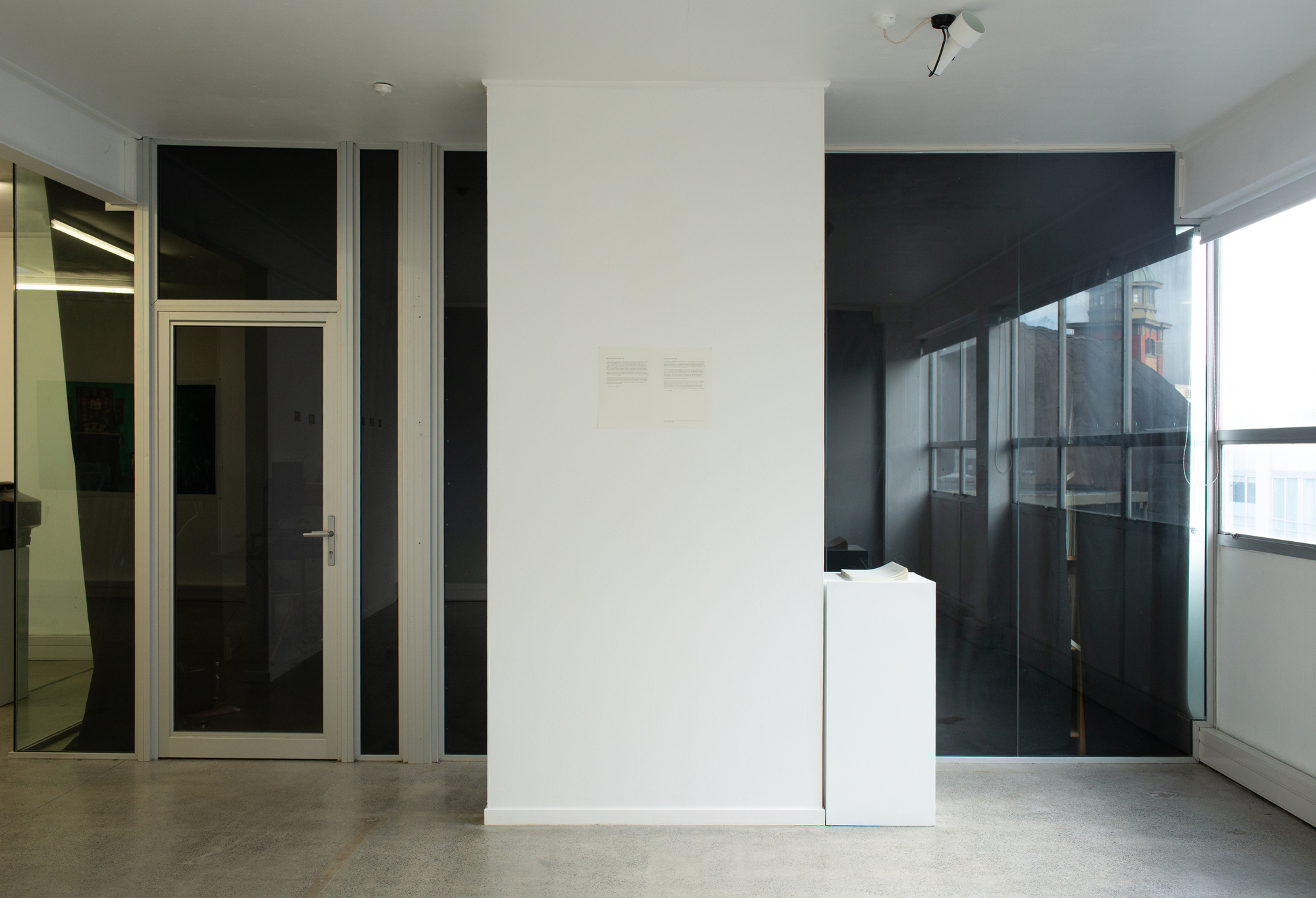
the aperture of the moon
Lisa Crowley
An aperture is usually associated with vision. Controlling how much light enters
an unilluminated zone; it is a physical opening between world and interior, that
enables the production of an image. Taking this idea of light moving into and
through a body, an aperture can also be understood as means for apprehending
the world, its structures, forces, atmospheres.
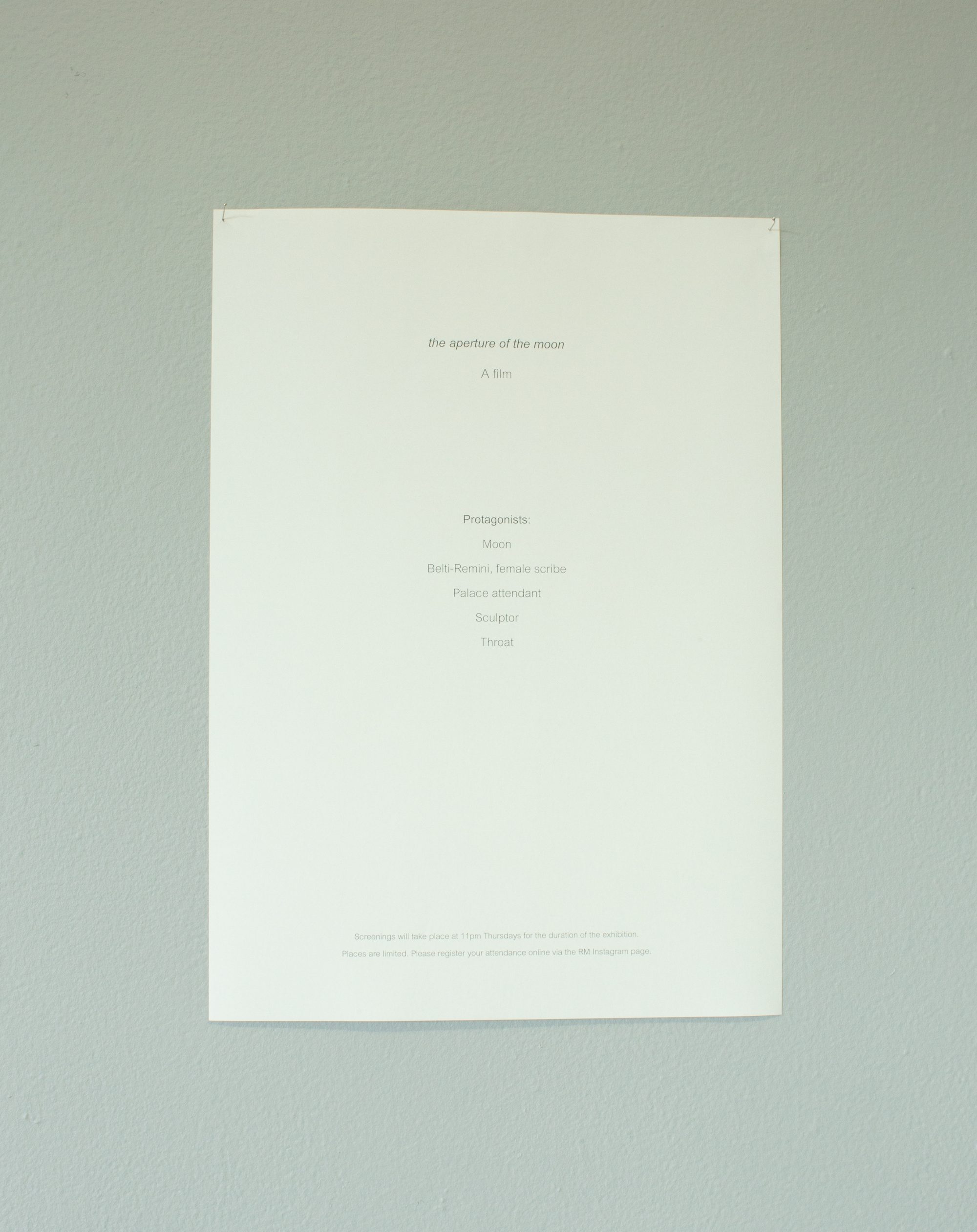
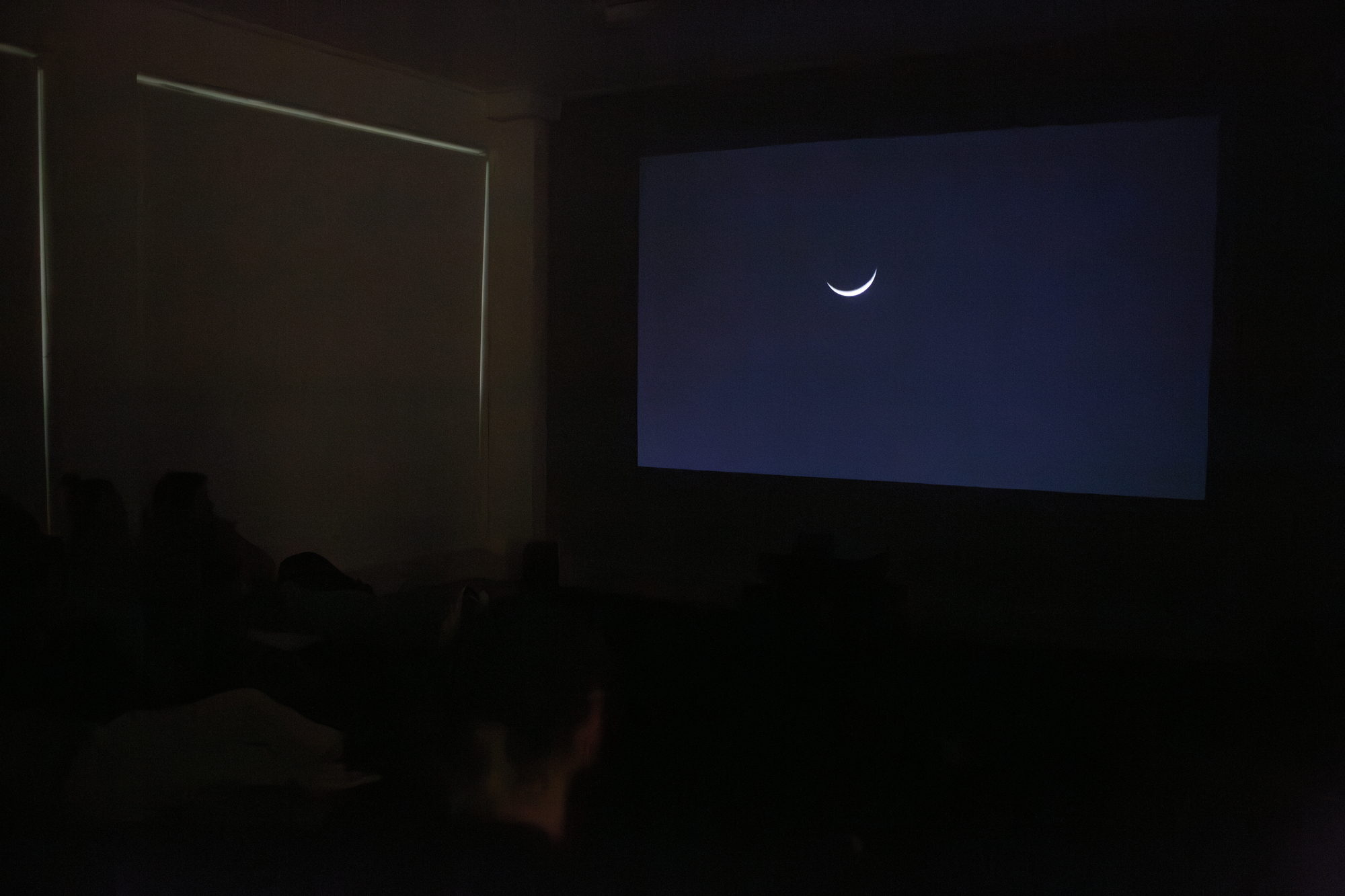
The film considers several protagonists drawn from the historical record.
These include a scribe, an attendant and a sculptor, whose labour in different
ways served to maintain both class structure and state power within Ancient
Mesopotamia. Traces of this labour are observed through verbal description;
a clay tablet, a list of palace wages, a photograph, an ancient sculpture.
Carrying ideas of scribing and illumination, these traces reveal the film’s female
protagonists as paradoxical and unmeasurable.
Viewers were invited to attend small, late-night screenings, weekly on Thursdays,
beginning at 11pm. Presenting the film at this time, in the hour that precedes
midnight, places the audience within an intimate, threshold moment. In this
temporary clearing or opening, the unacknowledged lives of others might
imperceptibly draw on us — like the gravitational pull of the moon, in order
that they may be approached and considered carefully across time and space.
Images by Antje Barke